What should I do in the first minute after a crash?
Turn on the hazard lights straight away and do not move the car. Thai police treat a moved car as a changed scene, and then there is nothing to show who crossed into the oncoming lane. The warning triangle is in the boot under the mat. Place it 30 metres behind the car, or just past the bend on a hill road so oncoming drivers see it in time. At night or in heavy rain turn on the sidelights as well: on a wet road hazard lights alone are visible from only about fifty metres.
How do I help the injured before the ambulance arrives?
Call an ambulance on 1669: the call is free from any phone and the operator speaks English. You will be asked for the district, a landmark and the number of injured. Name the nearest 7-Eleven, hotel or beach turn-off: that helps them find you faster. Do not lift or move an unconscious person or a motorbike rider unless there is a risk of fire, and do not take the rider's helmet off: with a neck injury that is more dangerous than the crash itself. Until the medics arrive, shade the injured person from the sun, do not give them anything to drink and do not leave them alone.
What should I photograph at the scene?
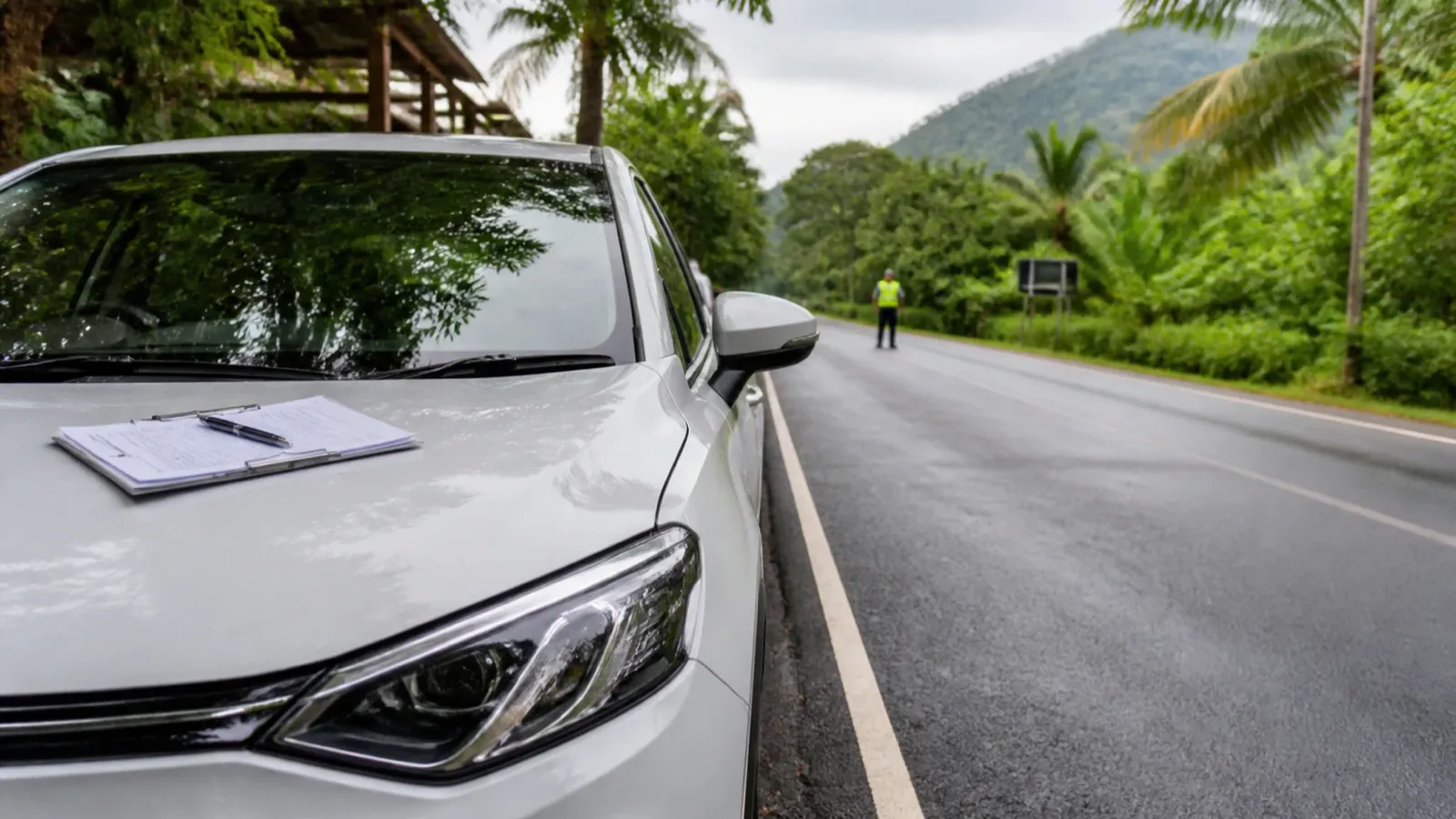
Take pictures before anyone moves the cars. You need four sets of shots: the whole scene from both sides, showing road markings, signs and landmarks; the position of the cars relative to each other; close-ups of all damage on both cars; and the other driver's number plate, licence and insurance sticker. Add a short video walking round the scene: it shows skid marks, debris, the road surface and the weather. Send everything to your MonkeyCar manager on WhatsApp before the insurance representative arrives.
When should I call MonkeyCar?
Call your MonkeyCar manager right after the police and before any talk about money. The manager will help with translation, contact the insurer and explain what you are being asked to sign. If the car cannot be driven, the rental company arranges a tow truck. Support works around the clock. If the signal is poor, write on WhatsApp or Telegram: photos get through even where a call drops.
Which police number should I call: 1155 or 191?
The tourist police number is 1155, the regular police 191. On 1155 they answer in English and are used to dealing with foreigners; on 191 English is not guaranteed. Wait for the paperwork to be completed even if the damage looks like a scratch. Without a police report the insurer does not open a claim, and the renter pays for the whole repair, including from the deposit. Leaving before the paperwork is finished also breaks the rental agreement: it cancels the Full Insurance option if you took it.
Can I sign papers in Thai?
Not until they have been translated for you. At the scene you may be handed a paper in which you admit fault or waive your claims, and the consequences show up weeks later when the insurer refuses to pay. Wait for an interpreter or for help from your MonkeyCar manager, and sign only what has been translated to you out loud. Do not admit fault out loud either: in Thailand the police decide who is at fault from the scene, and a hasty admission turns the case against you.
Which documents should I take from the scene?
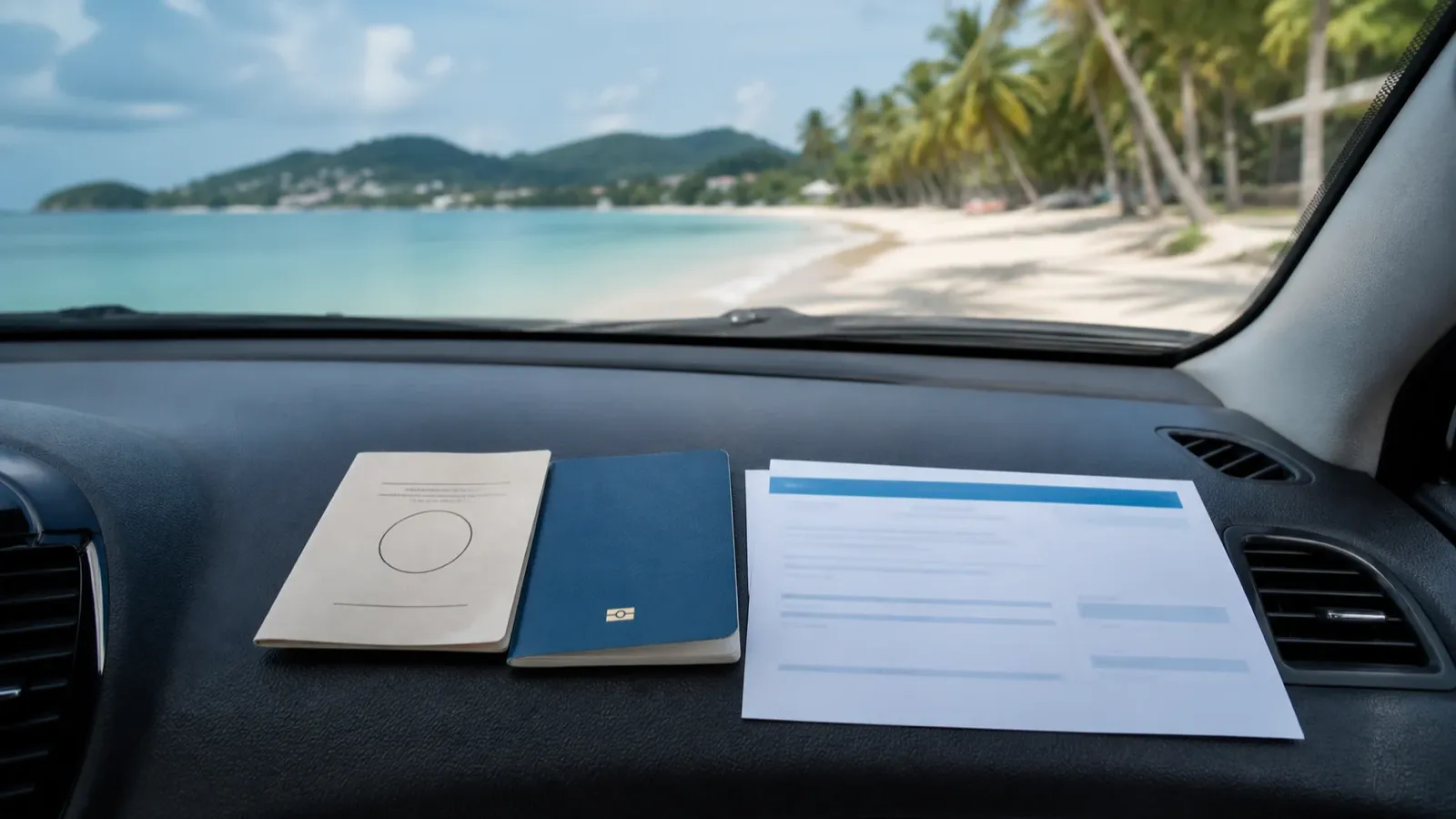
Leave the scene with a copy of the police report, the other party's contacts and insurer, the case number and every receipt: towing, medical care, storage. These papers are what the insurer pays out on and what your deposit is returned on; without them, a month after you fly home the dispute comes down to one word against another. Photograph each page straight away and send copies to the manager in your chat: paper gets lost on the road, but the chat stays.
How do I get a copy of the police report?
Ask for a copy of the police report (บันทึกประจำวัน) at the scene, or find out where and when to collect it: usually at the station within 1–3 days. Without the report the insurer may drag out the claim, and the deposit is not returned until the case is closed. Photograph the report straight away, even if you were promised a paper copy later. That way you still have it if the paper copy is delayed, and MonkeyCar can pass the photo to the insurer.