Where can I park in Phuket?
The kerb colour works as the sign. A white kerb or no markings means you can park. Yellow-and-white means no parking, though you can stop for a minute. Red-and-white means no parking and no stopping, and cars there are towed quickly and without warning. Paid car parks near the beaches and in the Old Town cost 20–50 baht an hour; leave the ticket under the windscreen. In high season it is easier to use a covered shopping-centre car park such as Jungceylon in Patong: it is free with a receipt from the shops, otherwise you pay by the hour, and the seafront is a five-minute walk away. Do not leave things in sight: windows are rarely broken, but a bag on the seat attracts thieves.
What fuel should I put in the car?
Most MonkeyCar cars take Gasohol 95. Only pickups and large SUVs need diesel, and the fuel type is written on the filler flap. At the station the attendant asks which fuel you need and points you to the pump. PTT, Bangchak and Shell stations have 24-hour tills, toilets and coffee; small private stations inland close at sunset. Attendants fill the car, there is no self-service: name an amount or say "full tank". Cards are accepted, but take a couple of hundred baht in cash on a long trip.
How should I drive in a tropical downpour?
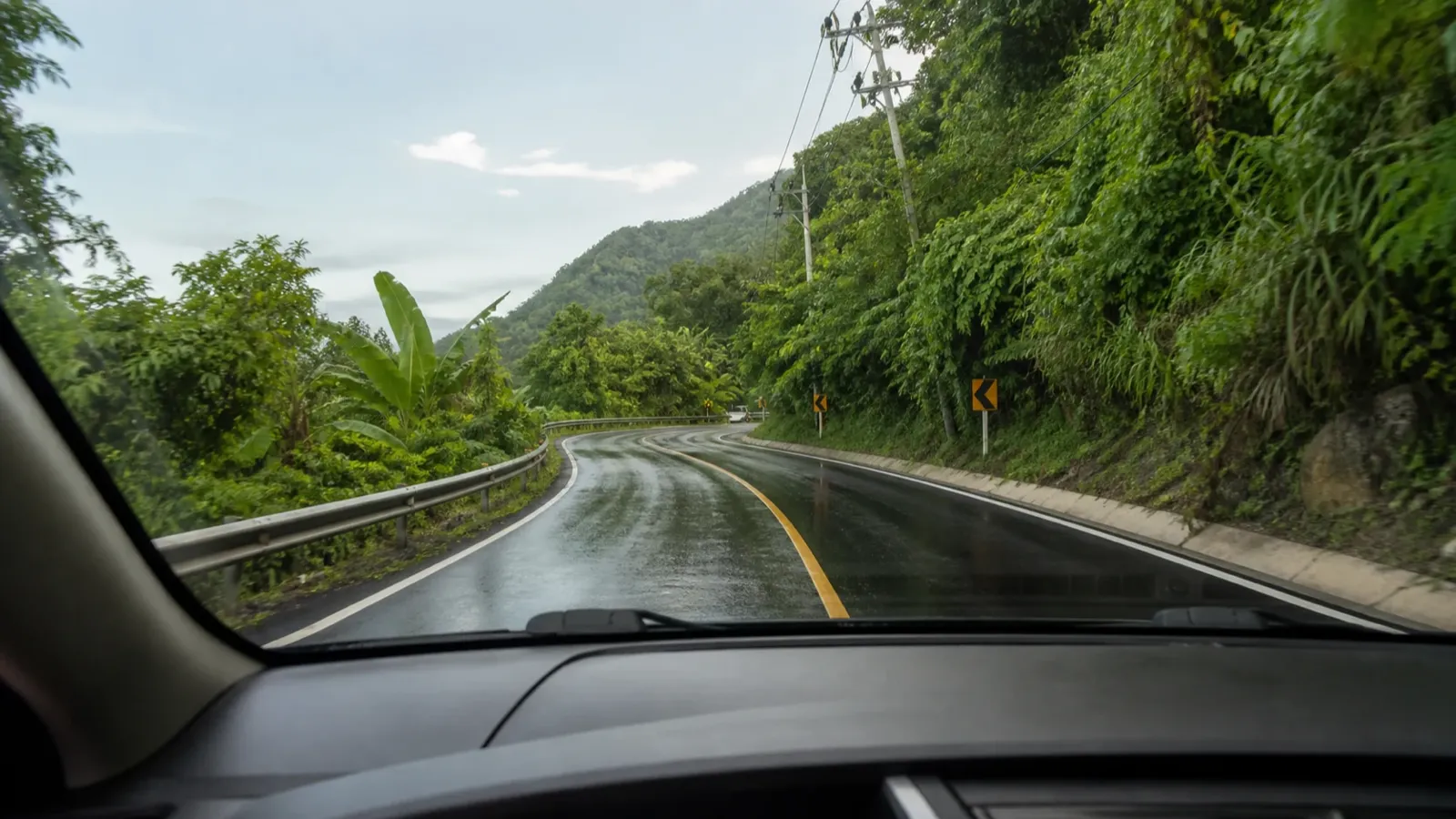
From May to October a downpour starts within five minutes and wet road markings shine like a mirror. Braking distances double, visibility drops to 50 metres, and deep puddles quickly form in dips and at junctions. It is better to wait out a heavy downpour: pull into a petrol station or under a 7-Eleven awning; it usually passes in 20–30 minutes. If you keep driving, turn on dipped headlights (hazard lights make it harder for others to read your moves) and double your usual following distance.
How should I drive down a mountain road?
The roads to Karon Viewpoint, Promthep Cape and the Big Buddha have long climbs and descents with gradients of up to 18%. Going downhill, switch to manual mode or L. If you coast in neutral and keep braking with the pedal, the pads overheat within a couple of kilometres and the brakes stop holding. Overheated brakes on a descent are a common and dangerous breakdown on rental cars, and the insurance does not cover it. Climb without sharp acceleration, and if motorbikes build up behind you, let them pass at the nearest lay-by so they do not overtake you on a blind bend.
How do I drive around motorbikes and tuk-tuks?
There are many times more motorbikes than cars on the island, and they appear from every side: overtaking on the right, riding between lanes, pulling out of side streets without signalling. Tuk-tuks stop right in the traffic to drop off passengers. Before every lane change check your mirror and blind spot twice and signal early. Do not argue with or chase a rider who cuts you up; keep your distance. If you are reversing out of a parking space and cannot see, ask a passenger to get out and guide you: children often ride on motorbikes without helmets and can be spotted too late.
Which navigation app should I use?
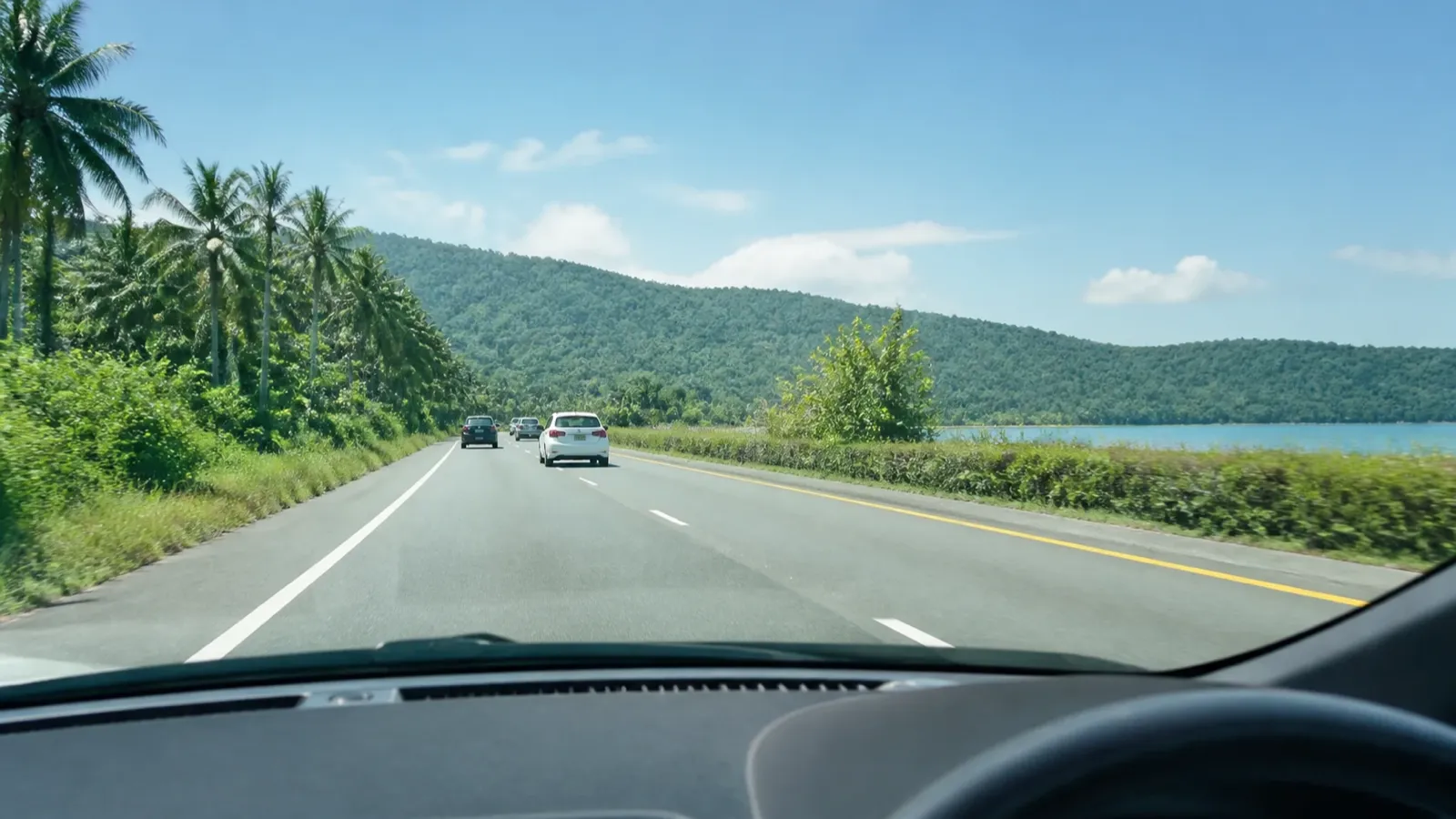
In Phuket Google Maps is more accurate than Yandex and knows the one-way streets of the Old Town better. Before heading into the hills, download an offline map of the island: the signal drops on the climbs to viewpoints and on the east-coast roads. Sometimes the navigator sends you on a "short cut" over dirt tracks and private roads, where the insurance does not apply, so watch the road surface. Allow time for traffic: from 16:00 to 19:00 the Patong to Chalong stretch and the approach to the airport are jammed, especially in high season.
What should I know about driving at night?
Only the main roads are lit. Side roads have no street lights, and a pedestrian in dark clothes, a dog or a motorbike without a rear light appears in your headlights only a few metres ahead. If you can, get back before sunset: almost all year round it gets dark around 18:30, and quickly. At night keep dipped headlights on, cut your speed by a third and take the bends along the beaches carefully: the markings there are barely visible, and that is also where you most often meet drivers coming back from a bar.
Which numbers should I save in my phone?
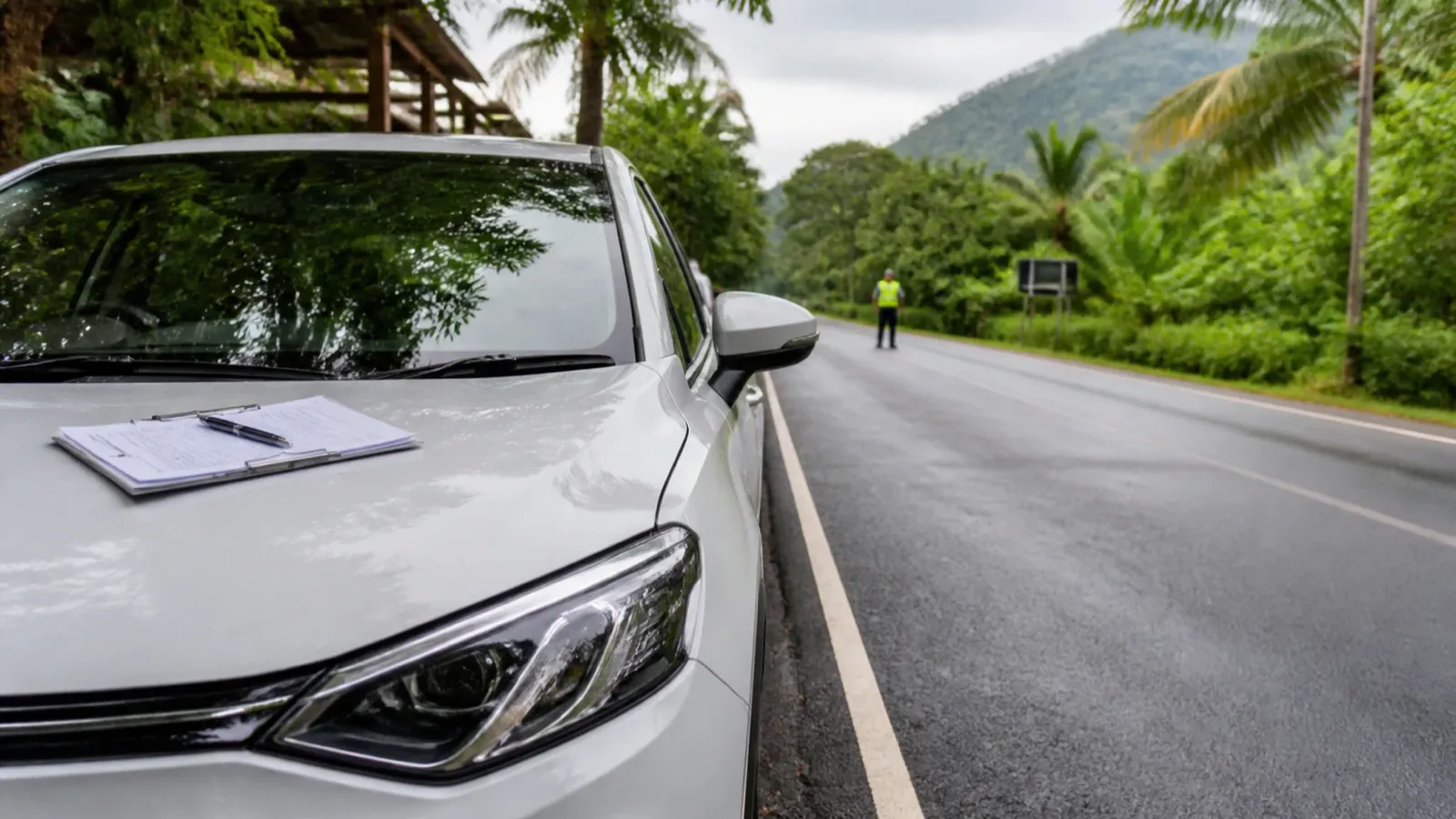
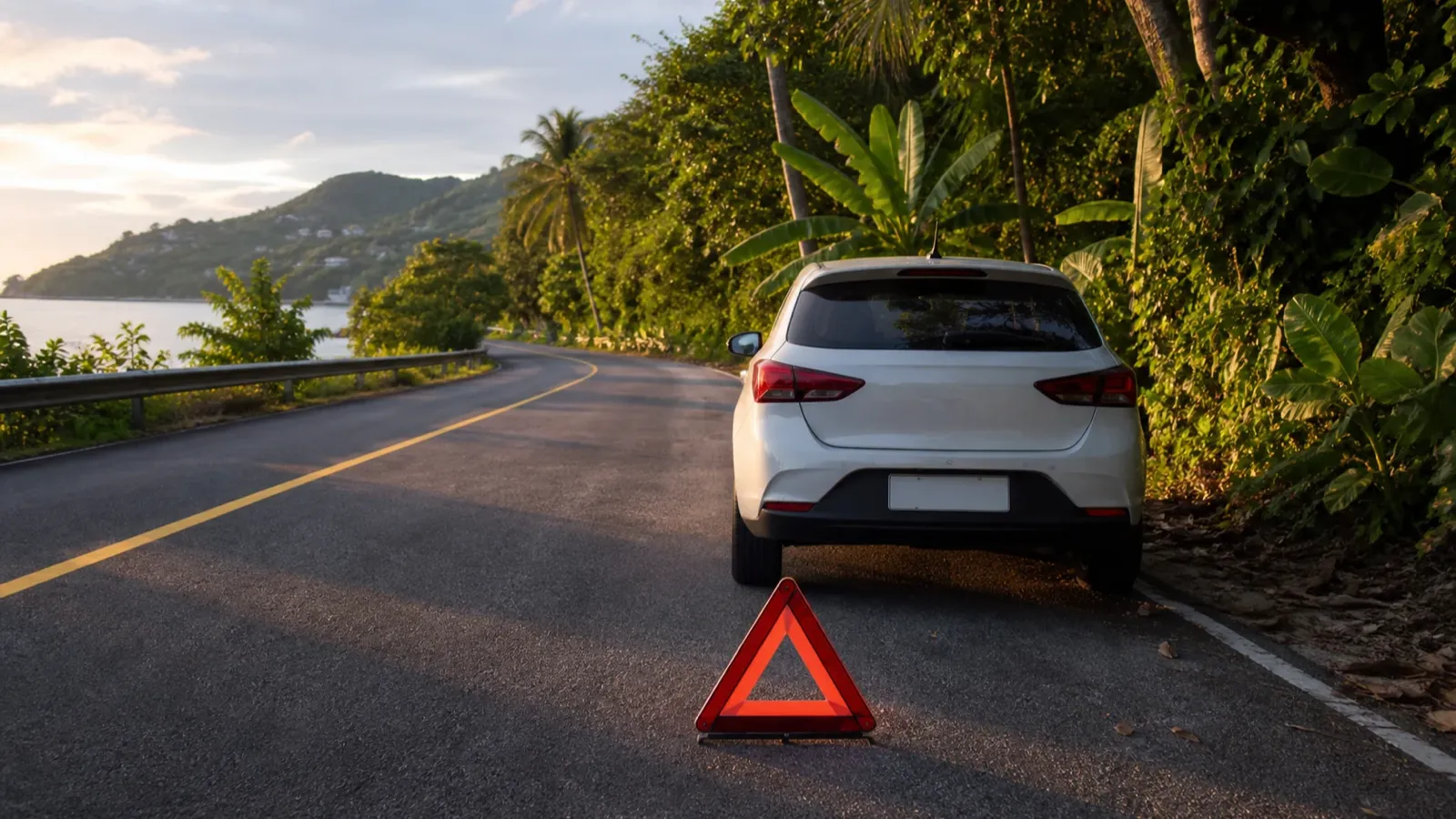
Save four numbers: tourist police 1155 (English spoken), ambulance 1669, police 191, and road assistance and towing 1193. Calls to them are free from any mobile, even with no credit. The fifth number is your MonkeyCar manager, which is in your agreement and your chat. After an accident, a puncture, a tow or a disputed fine, message the manager first: they will help with translation, and the problem gets solved faster than through a language barrier at the roadside.
How do I get through a roundabout?
Several large junctions in Phuket are roundabouts, for example at Central Festival and Chalong Circle. Cars already on the roundabout have priority, and those entering give way to them. If you are taking the first exit, keep to the left lane; if you are going further round, keep right. Signal just before your exit rather than as you enter, so you do not confuse other drivers. Motorbikes on the roundabout often change lanes without signalling, so check your mirrors more often than usual.