

Driving guide
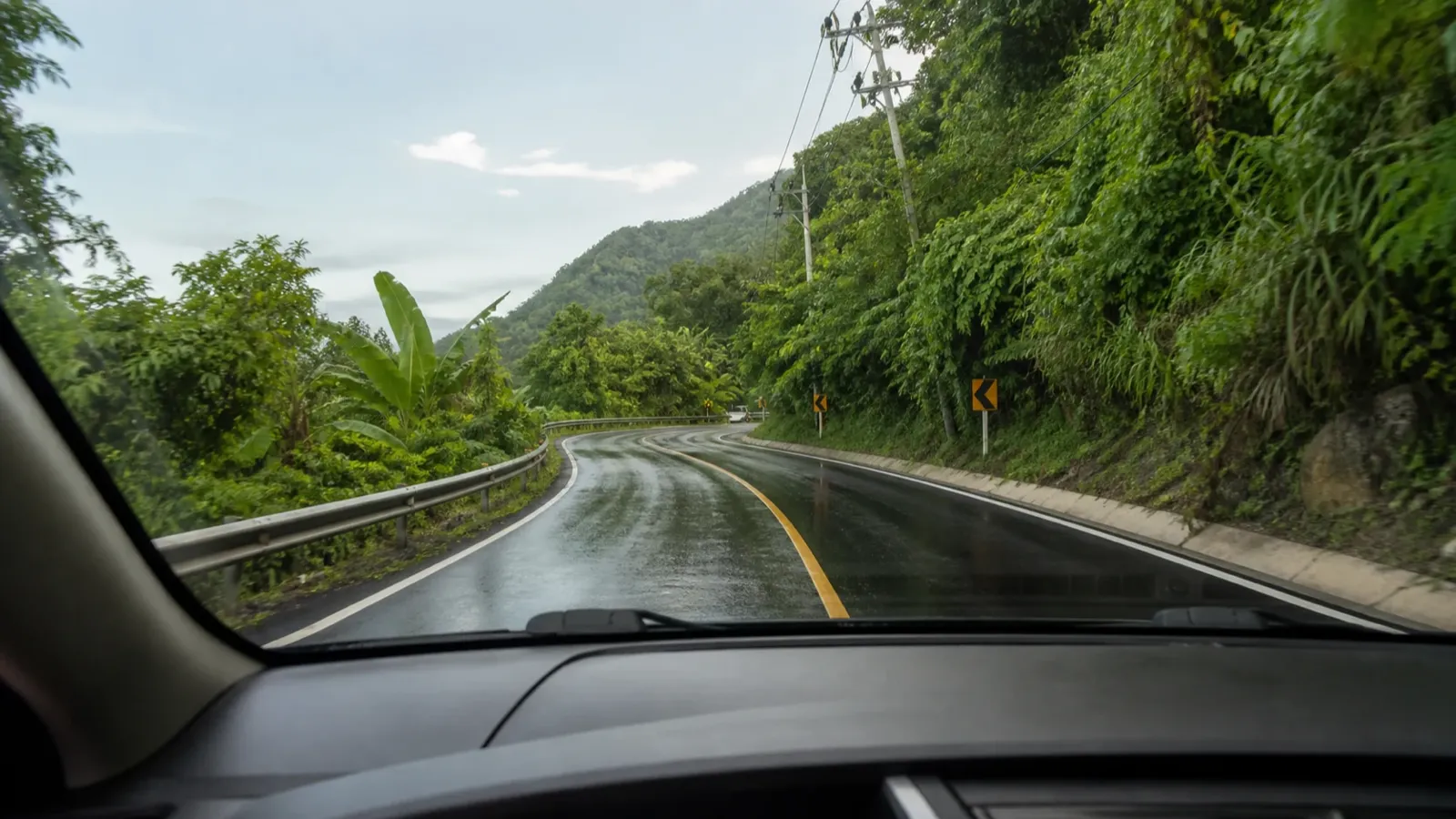
Driver documents
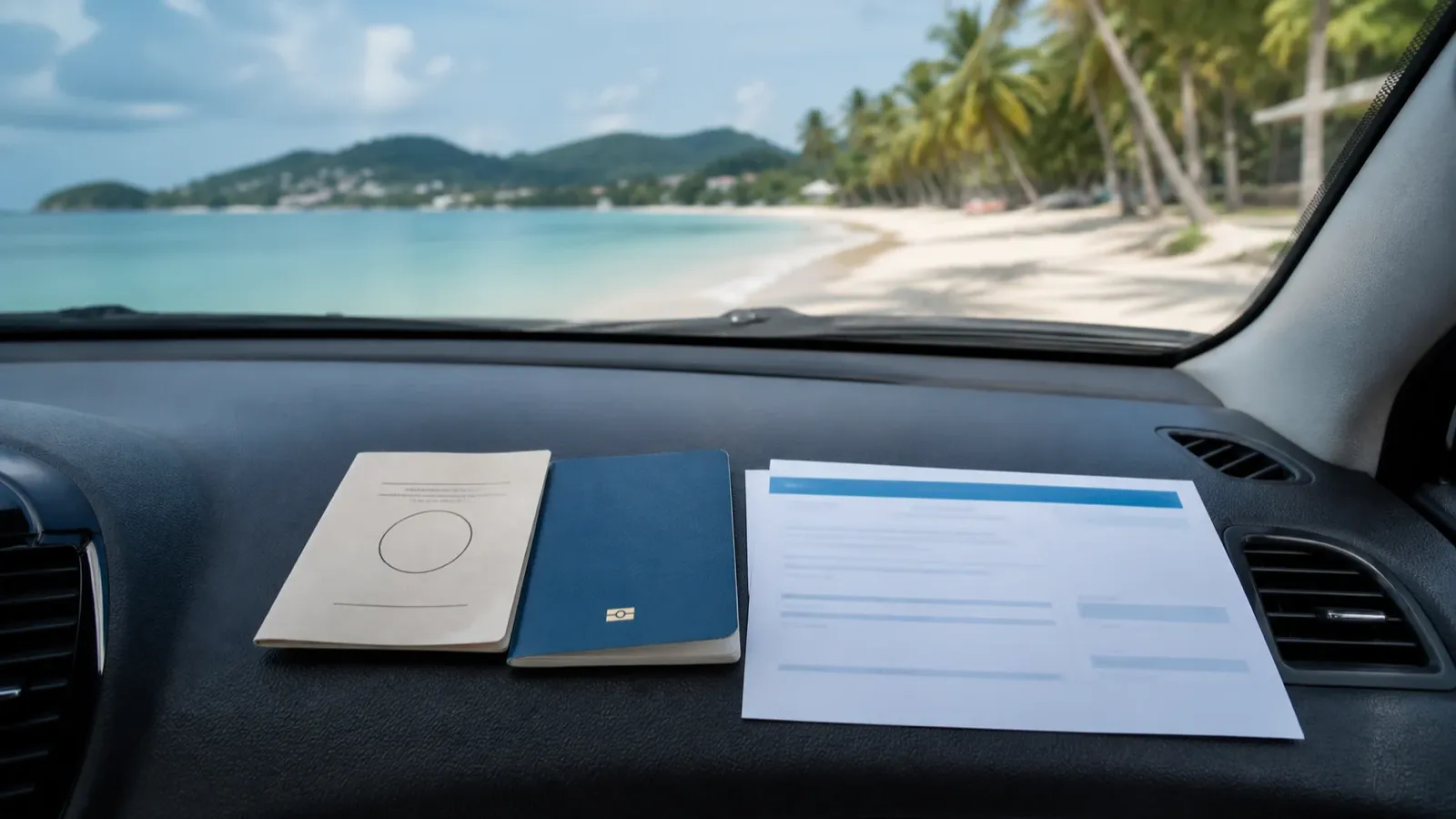
IDP, passport and insurance: what you must carry when driving in Thailand.
Guide section7 items
More details Thailand drives on the left: cars keep to the left side of the road, the steering wheel is on the right, and roundabouts run clockwise. Below is what else a tourist driving a rental car in Phuket needs to know: documents, traffic rules, 2026 fines, the police and accidents.
Based on the Land Traffic Act B.E. 2522, its 2025 amendments and MonkeyCar’s rental terms.
A rental car is the easiest way to get around Phuket: there is no public transport in the usual sense, taxis are expensive at peak hours, and routes between Patong, Kamala, Surin, Karon, Kata, Rawai, Chalong and Phuket Town are easiest by car. Before you drive, keep three things in mind: left-hand traffic, tropical downpours and heavy motorbike traffic (the main causes of accidents involving tourists).
A basic checklist for drivers: your national licence plus an International Driving Permit (IDP), your original passport, the rental contract, mobile data with an offline map and a charged phone. From May to October it is the rainy season: wet roads, deep puddles and poor visibility. On those days plan trips for the morning or after 4 pm, when the main downpour has passed.
Thai police are fair to tourists but do not forgive three things: driving without an IDP, drink-driving and leaving the scene of an accident. The English-speaking Tourist Police (1155) help in disputes with non-resident drivers. Most “on-the-spot fines” in reviews are either a real offence or an attempt to bargain with the patrol, and both end badly for the tourist. Pay officially, at a 7-Eleven with the code on the ticket or at a police station.
The guide is split into sections: documents, traffic rules and speed limits, 2026 fines, parking and paid zones, what to do after an accident and with the police, plus MonkeyCar customers’ most common questions. Each section can be opened separately and bookmarked. Cannot find an answer? Message on Telegram or WhatsApp: the manager is available 24/7.
IDP, passport and insurance: what you must carry when driving in Thailand.
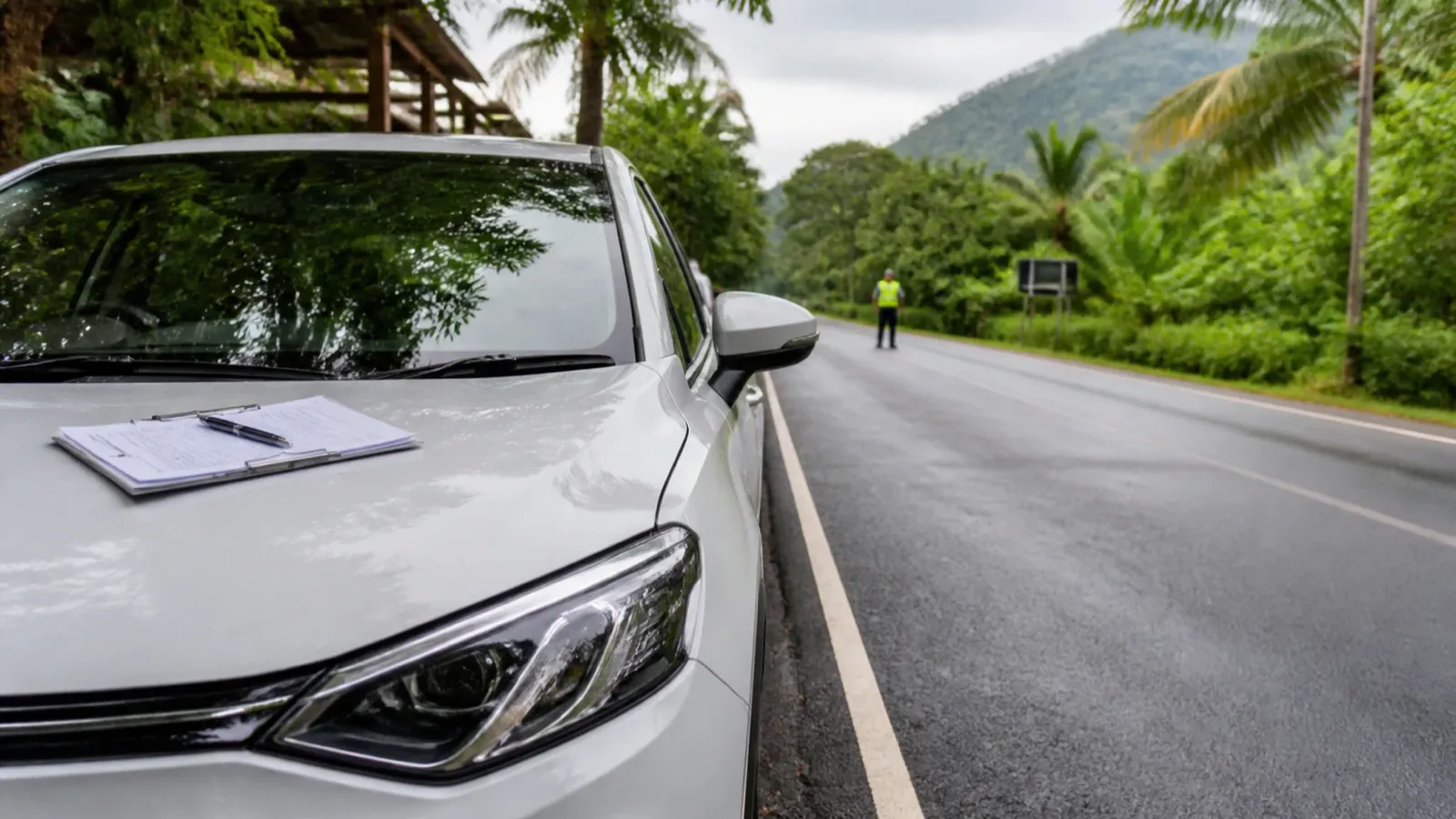
The essentials of Thai road rules: speed, driving on the left, alcohol, seat belts and child seats.
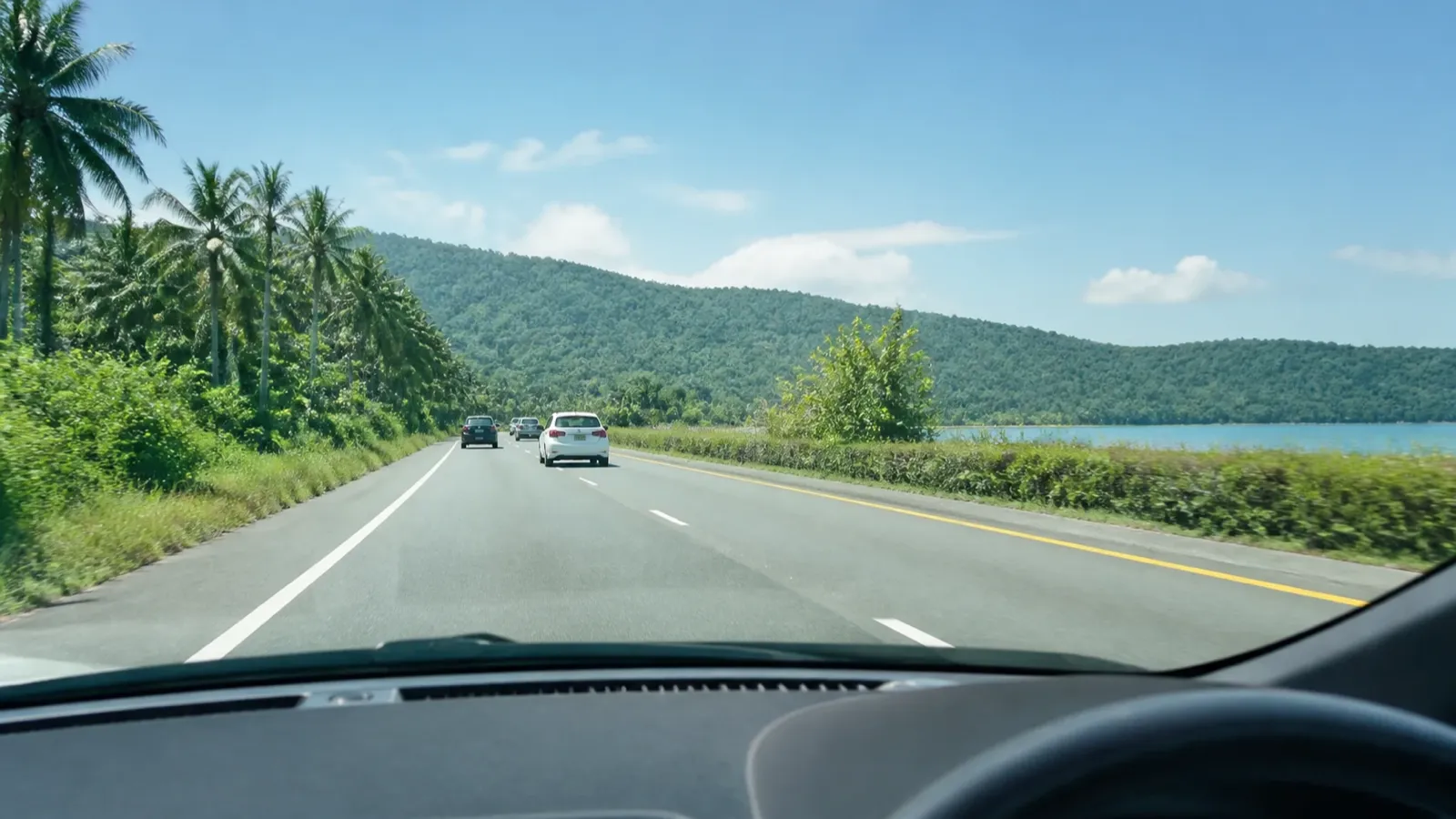
Amounts in baht for the main offences, where to pay and what happens if you pay late.
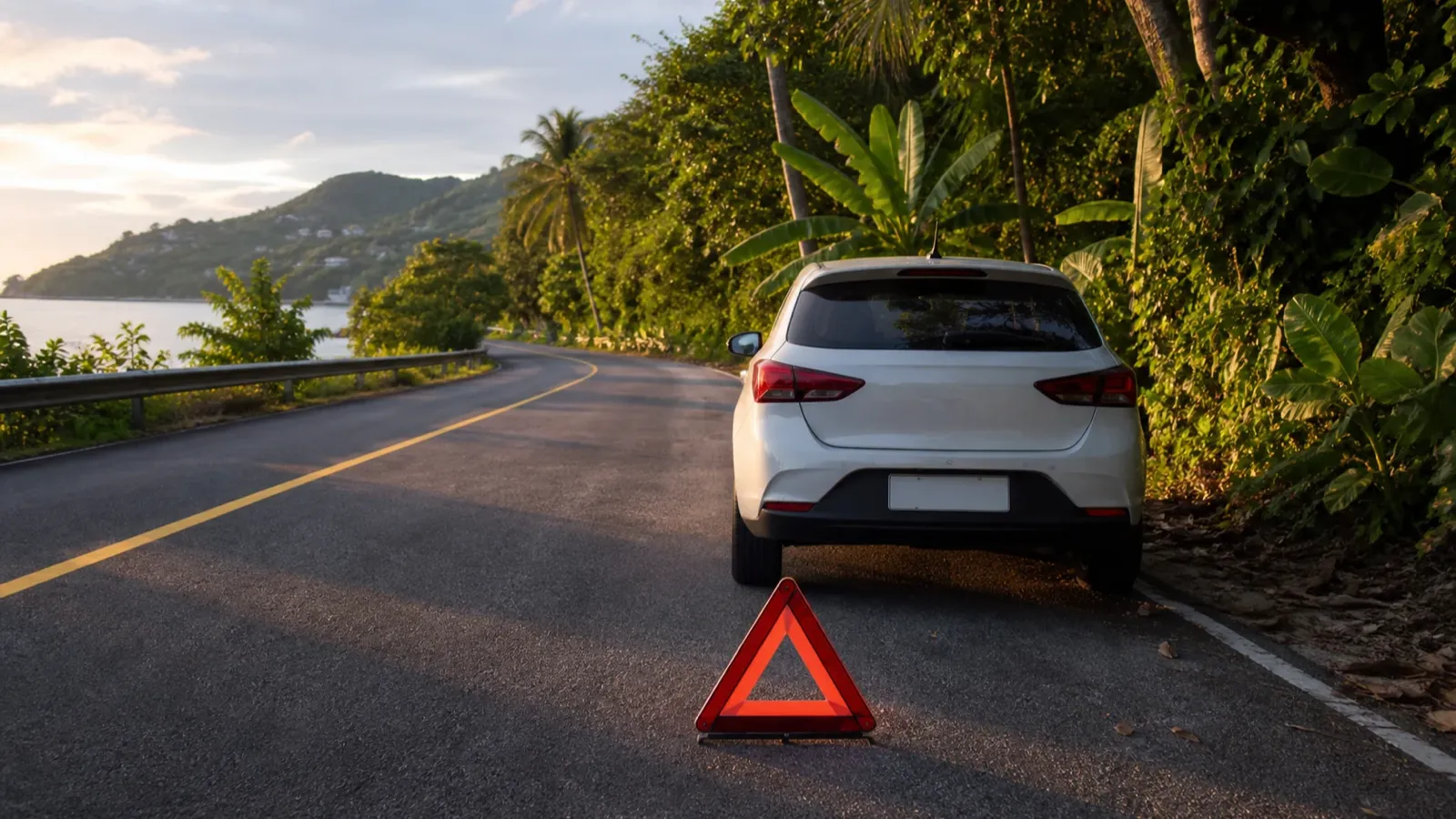
Parking, fuel, downpours, hill roads, motorbikes and night driving: what to expect at the wheel on the island.
What to do after a crash in a rental car: the first steps, who to call and which papers to take.
Short answers to popular questions about driving and car rental in Thailand.
What to do step by step after landing: passport control, baggage and meeting MonkeyCar.
Under Thai law a foreigner needs an International Driving Permit (IDP) together with their national licence, or a Thai licence. The IDP is issued in your home country on the basis of your national licence. Without it the police can fine you and the insurer may refuse to pay out after an accident. The minimum driver age at MonkeyCar is 21, with at least 1 year of experience.
In addition to your licence, you must carry the original passport (or a high-quality copy of the first page plus the visa page), the rental agreement and the insurance policy. Thailand carries out random document checks at tourist junctions, especially near bridges and the entrances to Patong. Having all four documents on hand means a 30-second check instead of hours of sorting things out at a police station.
Traffic drives on the left, as in the UK, Japan or Australia. The steering wheel is on the right, with the indicator stalk to the right of the wheel and the wipers on the left. This is the main cause of small mistakes in the first days, when drivers switch on the wipers instead of signalling. At roundabouts, traffic already circulating has priority. You overtake on the right; the left lane is for normal driving.
Speed limits: 80 km/h in built-up areas, 90 km/h outside towns and up to 120 km/h on divided highways of four lanes or more where signs allow it. Near schools and in central Patong the signed limits are lower, so follow the signs. Between the airport and Patong there are number-plate cameras, and their fines are deducted from the deposit. Seat belts are compulsory for all passengers, front and rear. Children under 6 must ride in a child seat: a seat or booster costs ฿100 per day, up to two per car.
A feature of Phuket is the mountain stretches between Patong, Kata and Karon Viewpoint with gradients of up to 18%. On descents use a low gear (M2 or L), otherwise the brakes overheat within 2–3 kilometres. If you smell the brake pads, stop for about 10 minutes at a viewpoint before driving on.
By law, speeding and running a red light cost up to ฿4,000, driving without a seat belt up to ฿2,000, and using a phone at the wheel ฿400–1,000. Serious violations are punished far more harshly: driving under the influence carries ฿5,000 to ฿20,000 and up to 1 year in prison, while refusing a breathalyser is automatically treated as refusal and equivalent to the maximum fine.
A ticket is paid at any 7-Eleven with its code or at a Land Transport Office. MonkeyCar deducts camera fines from the deposit.
Parking in Thailand is marked by kerb colour: red and white means no stopping (the car may be towed or clamped), yellow and white allows a short stop only, white or unmarked means you may park. Patong, Karon and Kata beaches have paid municipal car parks at ฿20–50/hour, paid to an attendant or a machine. Big C, Lotus’s and Central Festival usually offer free parking to customers. Central Phuket Town has paid parking and Sunday pedestrian zones (Walking Street).
The Sarasin Bridge between Phuket and the mainland is free, but the checkpoint by the bridge runs random document checks. The road to Krabi (Route 4) has no toll sections. Phuket has no toll roads.
Step 1: stop, switch on the hazard lights and place the warning triangle 30 metres behind. Step 2: make sure no one is hurt; if anyone is, call 1669 (ambulance). Step 3: photograph the scene from three angles: overall view, damage, and all parties’ number plates. Step 4: call the police (191) or the Tourist Police (1155). Without a police report the insurer does not pay. Step 5: call MonkeyCar (+66 65 976 9300), and support will arrange an interpreter.
Never: move the car before the police arrive (it counts as leaving the scene), admit fault verbally or in writing before contacting MonkeyCar, bribe the other party or officers, or sign documents in Thai without a translation. If the other side offers to “settle it here” for cash, refuse and wait for the police. Once the report is written you get a Thai document with a case number, which is needed for the insurance claim and repairs.
Thailand drives on the left: the steering wheel is on the right and you overtake on the right. Phuket's roads are smooth, petrol stations are everywhere and Google Maps is reliable, so most drivers get used to it on the first day.
Before your first drive, check three things. Your licence and IDP are in the car with the contract. Keep to the posted speed, which on the island is usually 50–60 km/h. After an accident, do not leave before the report is made: without it the insurance does not work. Each topic is covered in detail in the guide sections above.
Where to get an international driving permit for Thailand, which documents to bring, how long an IDP lasts and how to carry it with your national licence.
Read Driving for the first timeThailand drives on the left. A plan for your first 30 minutes at the wheel, what is mirrored, the common early mistakes and how to handle roundabouts.
Read InsuranceBasic cover and Full Insurance, the excess and the deposit: what is included in the rental price and when you can drive with no deposit (full insurance from 7 days).
ReadChoose a car for your route: free delivery to HKT airport, optional full insurance and 24/7 support.
Go to car catalog